

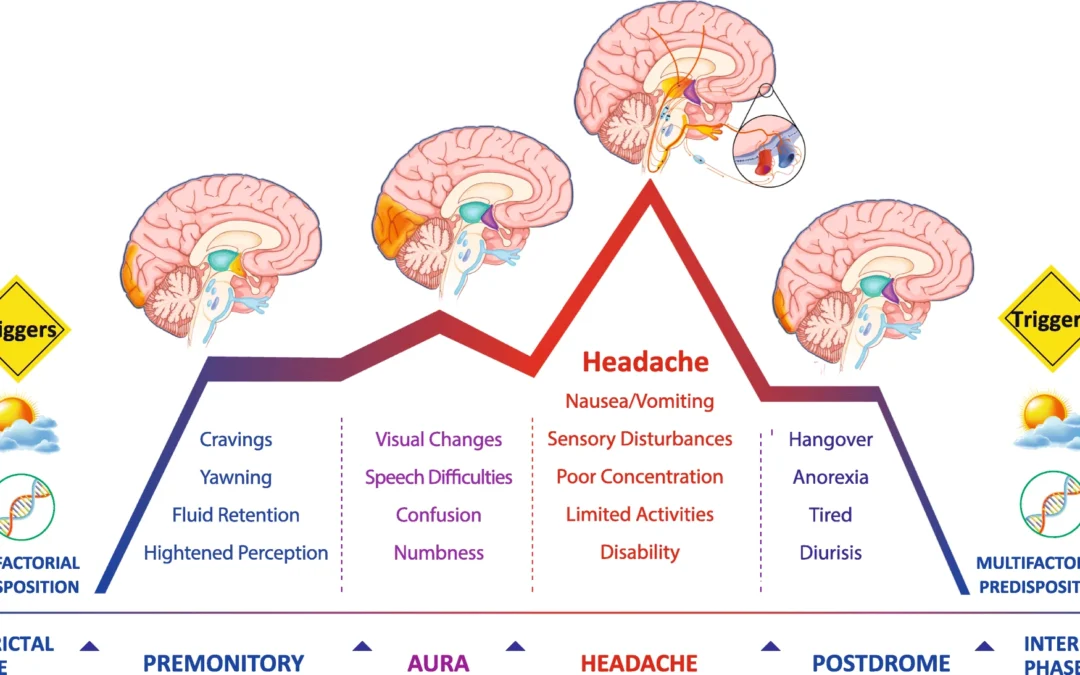
Migraine is a complex neurological disorder that stems from a heightened sensitivity in the nervous system.
If you live with migraines, your brain likely processes stimuli like light, sound, smell, stress, sleep changes – very differently than someone who doesn’t. Once triggered, your nervous system stays activated for longer periods of time, creating a cycle that can repeat without clear resolution.
Understanding the four distinct phases of a migraine is key to recognizing your body’s signals and responding early and effectively. Awareness of these phases can help reduce the severity and frequency of your migraines and empower you to take back control.
1. Prodrome (Premonitory Phase)
When it happens: Several hours to up to 2 days before the migraine
Frequency: Affects up to 60% of people with migraines
Symptoms may include:
- Muscle tension in the neck, shoulders, or jaw
- Irritability, anxiety, or sudden mood shifts
- Brain fog, difficulty concentrating
- Loss of appetite or unusual food cravings
- Fatigue and frequent yawning
- Light, sound, or smell sensitivity
Helpful steps to take:
Learn to listen to your early warning signs – these are your body’s signals that a migraine is coming. Start tracking your symptoms using a migraine journal or app. At this stage, you may still have time to interrupt the cycle. Try hydration with electrolytes, epsom salt baths, breathwork, homeopathic support for digestion, rest, or gentle movement. Evaluate possible triggers like stress, poor sleep, or inflammatory foods to guide your next steps.
2. Aura Phase
When it happens: Around 30–60 minutes before the headache begins
Frequency: Occurs in about 20% of migraine sufferers (not always with every migraine)
Symptoms may include:
- Visual disturbances: flashing lights, zigzag lines, tunnel vision
- Tingling, numbness, or “pins and needles” in the face or hands
- Trouble speaking or writing
- Muscle weakness or balance issues
Helpful steps to take:
Take this as a serious signal from your body that a migraine is imminent. Retreat to a quiet, dark space, and activate your migraine toolkit. Try cold compresses on the neck or head, rest, ice packs, essential oils, meditation, or calming herbal remedies. If needed, use acute medications at this stage under the guidance of your healthcare provider.
3. Headache Phase
When it happens: This is the headache phase and can last hours to several days
Frequency: Occurs 100% of the time unless the migraine is successfully interrupted
Symptoms may include:
- Throbbing or pulsing pain (typically one-sided)
- Nausea, vomiting, light/sound/smell sensitivity
- Blurred vision, dizziness, fainting
- Intense fatigue and an inability to function normally
Helpful steps to take:
Your focus here is comfort and support. Lie down in a quiet, dark space, use cold or heat therapy, essential oils, massage the neck or temples, and continue hydration. If you use medications, follow your migraine action plan. Ask a friend or family member to check on you if needed. Seek medical care if symptoms worsen or persist beyond 48 hours.
4. Postdrome (Recovery Phase)
When it happens: After the headache has resolved, usually 24–48 hours
Frequency: Most people who go through the attack phase will experience postdrome
Symptoms may include:
- Brain fog or difficulty concentrating
- Low energy or fatigue
- Irritability or emotional sensitivity
- Head pain with movement or exertion
- Reduced appetite, sensitivity to light/sound
- Possible return of the migraine if not fully resolved
Helpful steps to take:
This is the recovery window – a time to nurture your body. Focus on hydration, gentle movement (like stretching or walking), and supporting detox pathways: epsom salt baths, fresh vegetable juices, liver-supportive foods, and rest. Avoid over-the-counter medications at this stage to prevent rebound headaches and give your system a break.
Why This Matters
Recognizing each phase of your migraine allows you to respond proactively rather than reactively. By tracking your unique patterns and learning your early signs, you can begin to reduce the frequency, intensity, and duration of your migraine episodes.
If you’re just beginning your healing journey, I recommend using a simple monthly tracker to log your symptoms, sleep, diet, medications, and stress levels. These patterns offer invaluable insight for you and your care team.
Ready to Break the Cycle?
Migraines don’t have to control your life. After 15+ years of living with chronic migraines myself, I became migraine-free using a functional medicine approach that addressed my root causes.
You can do the same. If you’re curious about how functional medicine can help resolve migraines and chronic illness, click here to learn more about my approach.
*Image source: https://thejournalofheadacheandpain.biomedcentral.com/articles/10.1186/s10194-019-1066-0